Home › Concrete Foundations and Footings
We provide concrete foundations and footings for residential projects across Raleigh, NC. From footing trenches to stem walls and slabs, we pour structural concrete that supports your home or addition. Proper depth, reinforcement, and drainage details help protect your investment for years to come.
Superior Concrete Raleigh provides professional concrete foundations throughout Raleigh, NC, North Carolina and the surrounding area. Our licensed, insured crew delivers safe, clean, on-time work with a free estimate before anything begins. Call (984) 342-0629 or request your free quote.
Concrete foundations in Raleigh that are built for this soil and climate
Concrete foundations in Raleigh have to deal with humid summers, clay-heavy soils, and occasional hard winter freezes. Superior Concrete Raleigh designs and installs concrete foundations and footings specifically for these local conditions, not a generic plan pulled from another region.
In much of Wake County the top layer is a mix of expansive clay and fill. That soil shrinks in dry spells and swells after heavy rain. If the footing is too narrow, too shallow, or poured on poorly compacted fill, you can end up with cracks, settlement, and doors that stop closing properly. We start every foundation project with site-specific evaluation. That includes probing soil conditions, checking drainage patterns, and confirming required frost depth for your neighborhood.
Our team handles foundations for new homes, additions, garages, workshops, small commercial buildings, and heavy-duty slabs for equipment. We focus on correctly sized continuous footings, properly reinforced stem walls or monolithic slabs, and drainage details that keep water away from the structure. The goal is simple: a foundation that does not give you trouble in 5, 10, or 20 years.
Superior Concrete Raleigh is fully familiar with Raleigh and Wake County building codes, permit requirements, and inspection procedures for concrete foundations. That local experience lets us plan the job around real-world inspector expectations, utility markout timelines, and typical weather windows, which shortens delays and reduces surprises for you.
Our step-by-step process for concrete footings and foundations
A dependable concrete foundation comes from disciplined steps, not shortcuts. Here is how Superior Concrete Raleigh typically builds concrete foundations and footings.
Layout: We start with accurate layout from your plans, using string lines, stakes, and laser levels to mark footing locations, elevations, and wall thicknesses. For additions in older Raleigh neighborhoods we double-check squareness against existing structures so the new foundation lines up correctly.
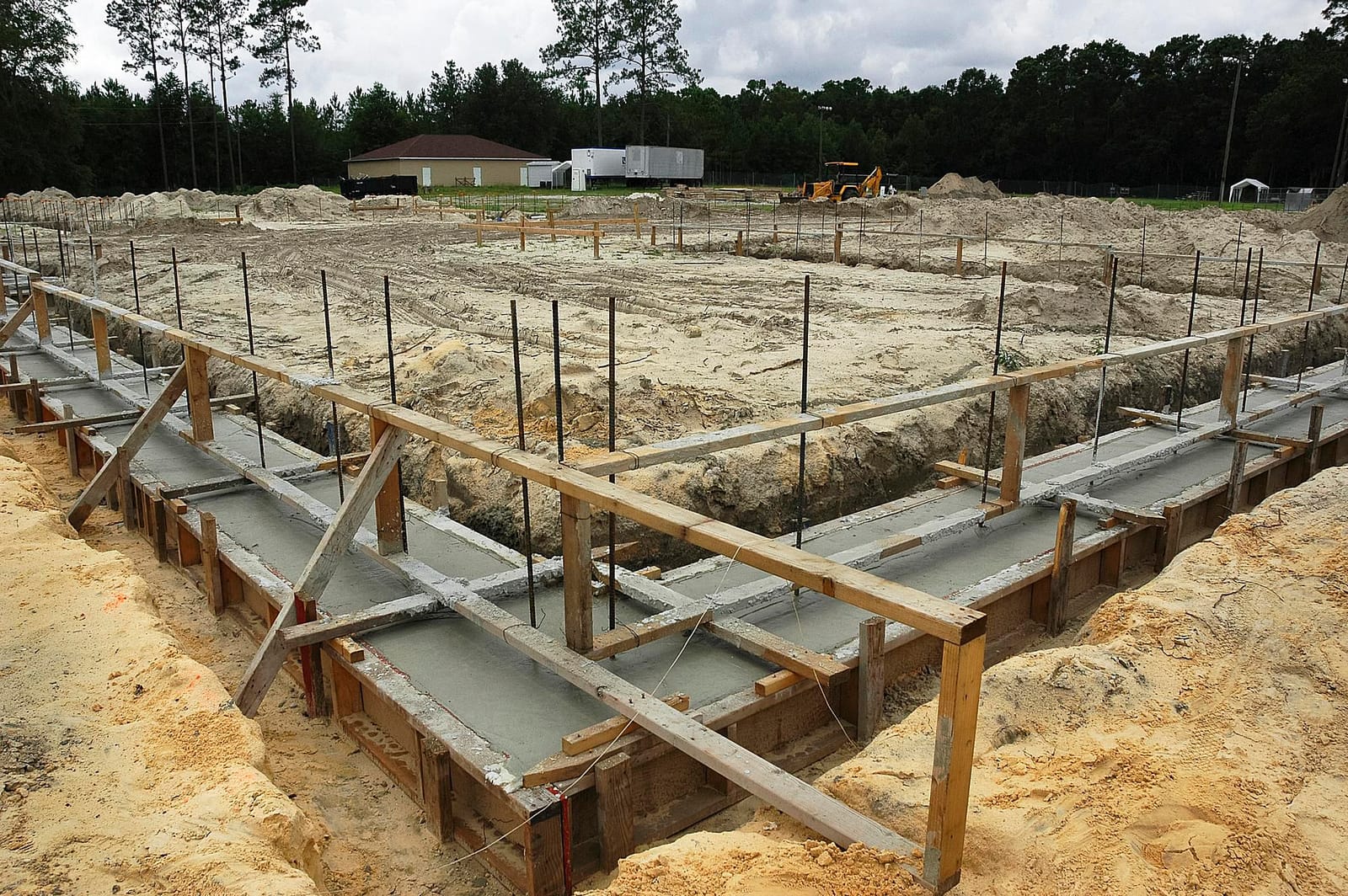
Excavation: We excavate to the design depth, which in this area usually means at or below the code frost depth and down to solid, undisturbed soil. Soft spots, organic material, or loose fill are removed and replaced with compacted stone or engineered fill. This step is critical in our local clay soils to minimize future settlement.
Forming and reinforcement: We set forms for footings and walls or slabs to the specified dimensions. Then we install rebar cages and dowels per engineer or code requirements. In high-load areas like garage door openings or column pads we add extra reinforcing and sometimes thicker pads to resist cracking.
Concrete placement: We order concrete mix designs suited to the job, factoring in strength requirements, aggregate size, and the day’s temperature and humidity. In hot Raleigh summers we often use set retarders and schedule early morning pours to avoid rapid surface drying and shrinkage cracking. Concrete is placed in continuous runs whenever possible, consolidated with vibrators, and struck off to level.
Finishing and curing: For walls, we focus on vibration and consolidation more than surface finish. For slabs, we screed, bull float, and finish based on the intended use, whether broom finish for garage slabs or troweled finish for interior floors. Proper curing is non-negotiable. We use curing compounds or wet curing methods to keep moisture in the slab for the first several days and protect it from direct sun and wind.
Backfill and final grading: After forms are stripped and walls are inspected, we backfill with suitable material, avoid heavy equipment close to new walls, and shape the grade to direct water away from the foundation.
Foundation types and options we install
Different structures in Raleigh need different foundation systems. Superior Concrete Raleigh helps you choose the right approach based on your building plans, soil, and budget.
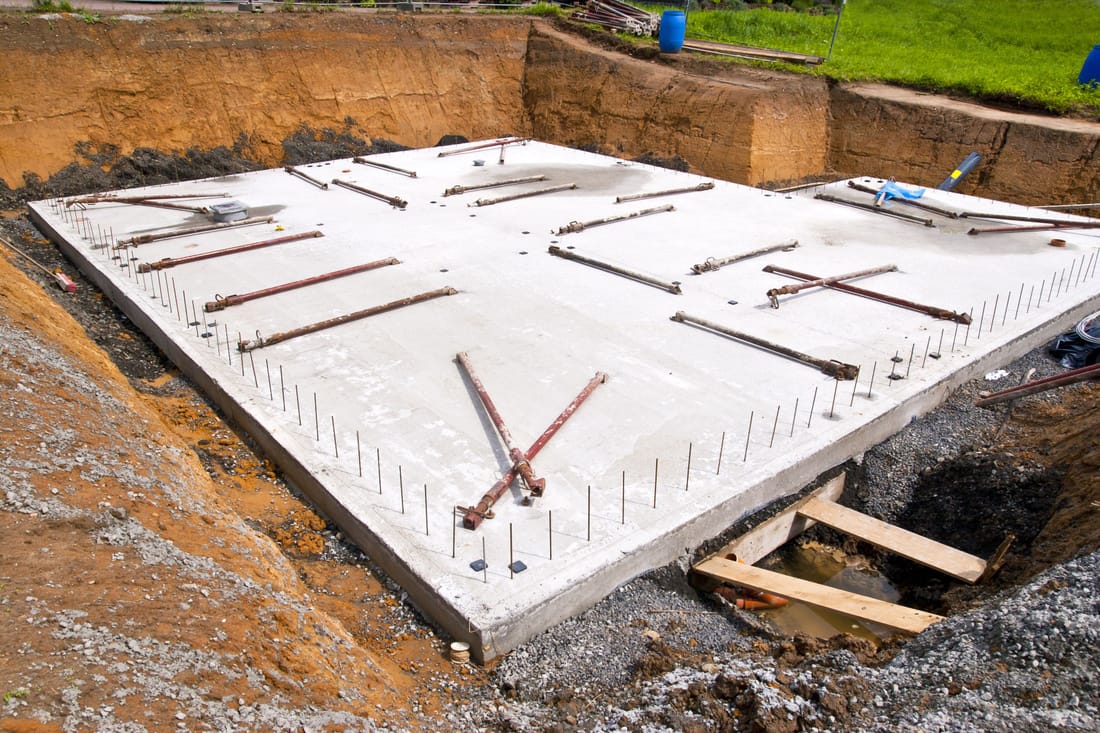
Monolithic slab foundations: Common for garages, shops, and some single-story homes. The footing and slab are poured as one piece, with thickened edges around the perimeter and at load-bearing walls. This option is cost-effective on flat, well-drained sites. We add vapor barriers and insulation details when the slab will be part of a conditioned living space.
Continuous footing with stem wall: This is a very common setup for crawlspace homes and many additions in this area. We pour a continuous footing, then build concrete or block stem walls on top. This system can handle moderate elevation changes on the lot. We integrate anchor bolts, sill plates, and access openings where needed.
Thickened edge slabs and structural pads: For heavy equipment pads, workshops with lifts, hot tubs, or exterior chillers, we design thickened edge slabs and isolated pads with heavier rebar grids and higher-strength concrete. This prevents settling and cracking around point loads.
Deepened or stepped footings: On sloped Raleigh lots or where fill is present we may use stepped footings that follow the grade while still sitting on undisturbed soil. This keeps the structure level while maintaining code-required footing depth.
Moisture and insulation options: If you have concerns about damp crawlspaces or slab moisture, we can add under-slab vapor barriers, perimeter drainage, and insulation at the slab edge. These details matter in our humid climate and can reduce long-term moisture issues and energy loss.
How Raleigh weather, soil, and timing affect your foundation project
Concrete foundations in Raleigh are heavily influenced by local weather and soil conditions, so schedule and methods are not arbitrary.
Heat and humidity: From late spring through early fall, jobsite temperatures can climb fast. Pouring concrete in full afternoon sun increases the risk of surface cracking and weak top layers. Superior Concrete Raleigh usually targets morning pours, uses admixtures to control set time, and keeps finishing crews on-site through the critical early hours. We avoid overworking the surface which can lead to scaling and dusting.
Rain events: Sudden storms are common. If footing trenches fill with water, the soil can soften and lose bearing capacity. We protect excavations with pumps, diversion ditches, and scheduling around forecasted storms whenever possible. If trenches do get saturated, we do not simply pump and pour. We recheck soil firmness and remediate soft areas with compacted stone or re-excavation.
Cold snaps: While truly severe freezes are less frequent here than in northern states, we still get overnight temperatures low enough to damage uncured concrete. For winter pours we may use warm water in the mix, insulated blankets, and adjusted mix designs to maintain proper curing temperatures.
Soil movement and drainage: Our clay soils expand and contract with moisture swings. Poor surface drainage around the foundation magnifies that movement. When we design your concrete foundations and footings, we pay attention to downspout locations, yard slope, and potential low spots. We may recommend French drains, gutter extensions, or minor regrading to keep water from pooling near footings.
Permitting and inspections: Raleigh and Wake County require footing and foundation inspections at specific stages. Coordinating excavation, pouring, and inspection windows around weather and inspector availability is part of our service, so you are not left managing those details alone.
Costs, estimates, and what drives the price of concrete foundations
Concrete foundation pricing is driven by more than just square footage. Superior Concrete Raleigh provides written estimates that break down the main cost factors so you understand where your money goes.
Site conditions: Access for trucks and equipment, amount of excavation, and whether we hit rock, deep soft soils, or heavy roots can all shift costs. A tight backyard in an older Raleigh neighborhood may require smaller machinery or hand work, which takes more time.
Design and loads: Thicker slabs, deeper or wider footings, higher stem walls, and additional reinforcing steel all add material and labor cost, but they are sometimes required by code or by your engineer based on the structure’s loads. Garage slabs with vehicle lifts, two-story additions, or structures on slope will be more involved than a simple single-story shed.
Concrete and reinforcement: Concrete strength rating, admixtures for weather or performance, and the amount of rebar and wire mesh significantly influence price. We specify these details up front so you are not surprised later by “extras” that should have been in the original bid.
Drainage and moisture control: Perimeter drains, sump pits, vapor barriers, and additional waterproofing membranes are optional in some cases and mandatory in others. They add to the immediate cost but protect the foundation and interior spaces from moisture problems that are common in our humid climate.
Timeline and coordination: If your project requires accelerated scheduling, off-hours work, or coordination with multiple other trades, that can affect labor costs. We discuss schedule expectations during estimating, so your budget and timeline match.
We encourage customers to compare not just bottom-line numbers but also what each bid includes in terms of footing depth, rebar spacing, concrete strength, and drainage provisions. A cheaper bid that skimps on these items can lead to expensive repairs down the road.
What to know before hiring a Raleigh concrete foundation contractor
Choosing the right contractor for concrete foundations and footings is one of the most important decisions you will make on your project. Here are practical points Superior Concrete Raleigh recommends you verify with any company you consider, including us.
Local code and inspection experience: The contractor should be able to explain Raleigh and Wake County footing and foundation inspection stages and typical requirements for your type of project. Vague answers here are a warning sign.
Specific foundation details in the quote: Ask to see footing width and depth, rebar size and spacing, slab thickness, concrete strength (psi), and any planned control joints or isolation joints. These are simple details that directly affect the performance of your foundation.
Soil and drainage strategy: Your contractor should talk about how they handle soft spots, standing water in trenches, and grading around the foundation. If they say they “just pour” as long as the inspector passes it, that is not enough for our challenging local soils.
Scheduling and protection: Find out how they plan to protect fresh concrete from surprise storms, extreme heat, or freezing nights. Ask who will be on site during the pour and finishing stages and how long they stay once the truck leaves.
References and similar projects: Ask to see photos or addresses of concrete foundations in Raleigh that are similar to your project: additions on sloped lots, detached garages, workshops, or crawlspace foundations. Talking to past customers who built something similar to your plan is more useful than generic references.
When you work with Superior Concrete Raleigh, you get clear communication about each of these points before we ever break ground. That approach results in concrete foundations and footings that match your plans, pass inspections cleanly, and stay solid for years in our Raleigh climate.